
As part of Emesent's continued monitoring and investigation into the root causes of aircraft incidents and near-misses, connector-related conditions have been identified that can contribute to in-flight power or communication loss.
All Hovermap operators, particularly those conducting underground drone operations, are reminded to include Fischer connector inspection, correct handling, and proper insertion checks as part of routine pre-flight procedures to help reduce these risks.
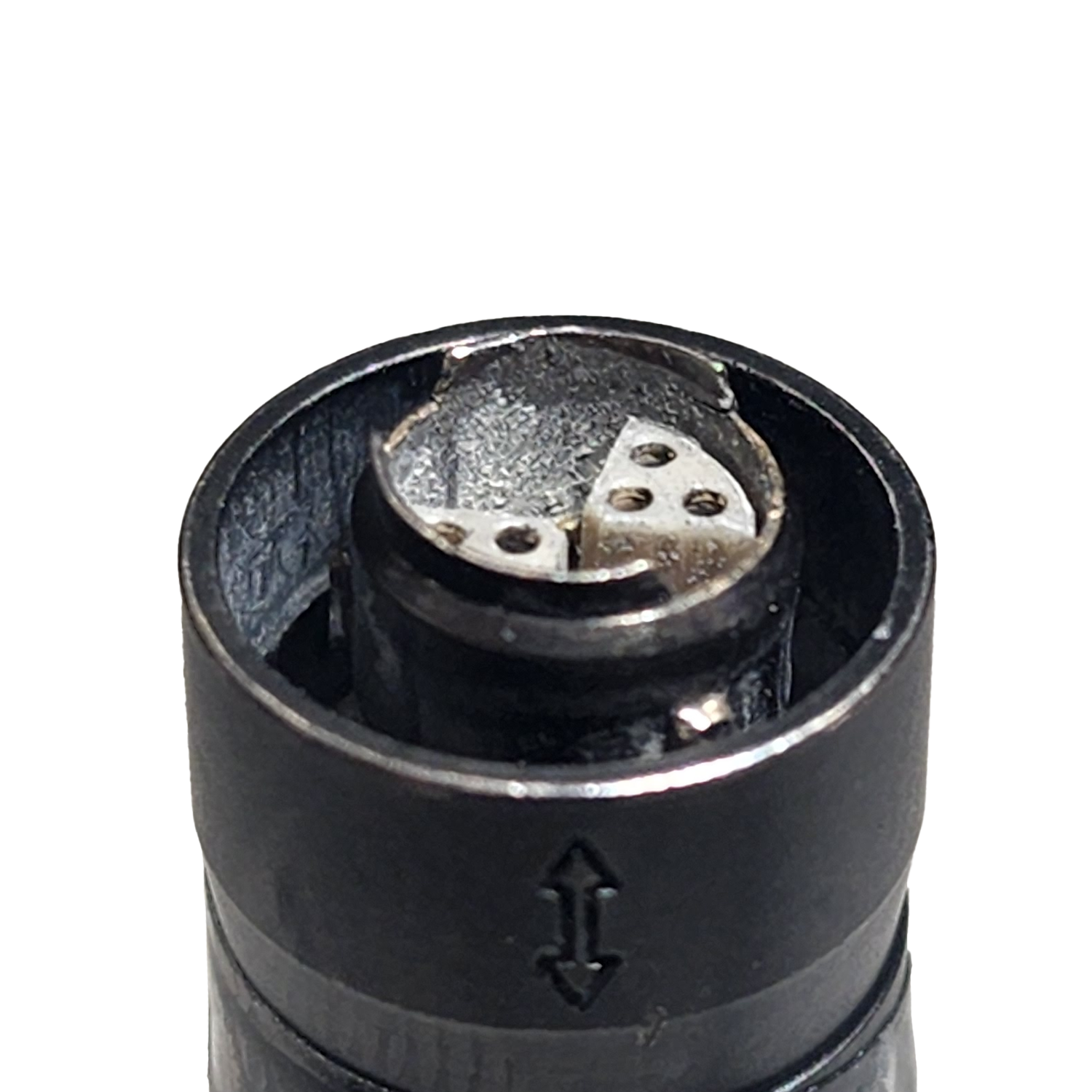
Fischer connector collar wear and chipping
Damage to the rim of the inner connector collar can occur if the connector is inserted at an angle or subjected to sideways pressure, particularly in restricted spaces. Fragments from the damaged collar may enter the connector interface and interfere with cable operation, resulting in intermittent or complete power or communication loss. This is more likely to occur in volatile or visibility-limited environments where debris can accelerate wear and conditions make it challenging to properly assess the cable.
Key points
Cause: angled insertion or sideways pressure during connection.
Impact: fragments from the damaged collar can enter the connector interface and interfere with operation, causing power or communication loss.
Risk factors: volatile environments where debris accelerates wear and conditions make inspection difficult.
Inspection tip: look for chips or cracks along the rim of the inner connector collar.
Visual comparison: serviceable vs not serviceable
❌ Not serviceable | ✅ Serviceable |
|---|---|
|
|
|
|
.png)
Improper Fischer connector insertion
Improper insertion occurs when the connector makes electrical contact but the push-pull latch has not fully engaged. Without the latch seated, the connector may disconnect under vibration or cable movement, resulting in intermittent or total loss of connection. This can happen if latch engagement is not verified after insertion or if debris prevents the latch from locking fully.
Key points
Cause: connector not fully latched during insertion.
Impact: disconnection during flight, causing loss of power or communication.
Risk factors: debris in latch area, restricted access to connector, no post-insertion check.
Inspection tip: after connecting, push until the latch clicks and gently pull to confirm it is locked.
Immediate operator actions
These checks should form part of every pre-flight routine to support safe and reliable operation.
Inspect all existing Fischer connectors before each flight for collar wear, chipping, or debris.
Check the Fischer connector on Hovermap for wear or debris.
Fit the rubber cap when the connector is not in use to protect it from dust and debris.
Continue monitoring connector condition as part of regular maintenance.
Clean connectors to remove dust and debris at least every two weeks, or more frequently in dusty environments.
Ensure connectors are fully aligned and inserted until they click, then gently pull to confirm they are locked.
Upgrade to the latest version of Cortex and keep systems updated as new versions are released, to maintain optimal operational reliability.
Replace connectors if wear or damage is identified, as damage can occur at any point in the service life through handling or debris ingress.
If damage to a current cable is found, contact Emesent Client Support with images of the cable connector end and the cable type. This may include Fischer-to-Fischer cables, fixed connection fitting kits for supported drones, and similar assemblies.
Our next steps
We'll work with operators to ensure they have operational cables through our replacement program, prioritising mining and underground operations.
We're exploring ways to further enhance connector design for long-term reliability.
We'll continue refining our inspection processes and testing standards.
Your safety and operational reliability are our top priorities. If you have any concerns about your Fischer connector or require a replacement, contact Emesent Client Support.
Related documentation and support
For assistance, contact the regional Emesent partner or the Emesent Client Support team.